

Introduction
Tennis has evolved into a high-performance sport where the playing surface plays a crucial role in determining game quality, player safety, and long-term durability. Among the various tennis court flooring options available today, Synthetic Acrylic Flooring has emerged as one of the most preferred choices for modern courts. Whether for schools, sports academies, residential projects, or professional arenas, an acrylic tennis court delivers consistent performance, excellent grip, and long-lasting value.
This guide explains everything about synthetic tennis court surface, including benefits, cost factors, installation process, and key considerations for tennis court construction India.
What is Synthetic Acrylic Tennis Court Flooring?
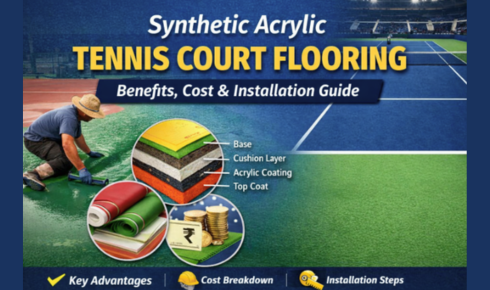
Synthetic acrylic flooring is a multi-layer coating system applied over a concrete or asphalt base. It consists of acrylic resins, silica sand, and specialized coatings that create a smooth, durable, and anti-slip playing surface.
This type of tennis court materials system is widely used in outdoor courts due to its ability to withstand harsh weather conditions while maintaining consistent ball bounce and player comfort.
Key Benefits of Acrylic Tennis Court Flooring
1. Superior Playing Performance
An acrylic tennis court provides a uniform surface with predictable ball bounce. This consistency enhances player performance and reduces the risk of injuries.
2. Weather Resistance
India’s climate can be extreme, but synthetic tennis court surface systems are UV-resistant, waterproof, and capable of handling temperature variations without cracking.
3. Low Maintenance
Compared to clay or grass courts, tennis court flooring with acrylic coatings requires minimal maintenance. Occasional cleaning and periodic resurfacing are sufficient.
4. Long Lifespan
With proper installation and maintenance, Synthetic Acrylic Flooring can last 8–10 years or more, making it a cost-effective investment.
5. Customization Options
Acrylic surfaces are available in various colors and textures, allowing customization based on branding, aesthetics, and gameplay preferences.
Standard Tennis Court Dimensions
Understanding tennis court dimensions is essential before starting construction:
- Length: 23.77 meters (78 feet)
- Width (Doubles): 10.97 meters (36 feet)
- Width (Singles): 8.23 meters (27 feet)
- Recommended total area with runoff: 36m x 18m
Accurate dimensions ensure compliance with international standards and optimal gameplay.
Cost of Tennis Court Construction in India
The cost of tennis court construction in India depends on several factors:
1. Base Construction
- Concrete or asphalt base preparation is a major cost component
- Proper leveling and drainage increase durability
2. Acrylic Coating System
- Number of layers (primer, cushion, color, topcoat)
- Quality of materials used
3. Site Location
- Transportation and labor costs vary across regions
4. Additional Features
- Lighting systems
- Fencing
- Drainage systems
Average Cost Estimate
In India, the cost of an acrylic tennis court typically ranges between:
₹4 lakh to ₹10 lakh+, depending on specifications and site conditions.
Installation Process of Synthetic Acrylic Tennis Court
A professional installation process ensures durability and performance:
Step 1: Base Preparation
The foundation (concrete or asphalt) is leveled and cured properly to avoid cracks and uneven surfaces.
Step 2: Surface Cleaning
The base is cleaned to remove dust, oil, or debris before applying coatings.
Step 3: Application of Acrylic Layers
Multiple layers of Synthetic Acrylic Flooring are applied:
- Primer
- Resurfacer
- Cushion layers (optional)
- Color coating
- Line marking
Step 4: Curing & Finishing
The surface is allowed to cure, ensuring strong bonding and durability.
Choosing the Right Tennis Court Materials
Selecting the right tennis court materials is critical for long-term performance:
- Use high-quality acrylic resins for durability
- Ensure proper sand mix for anti-slip texture
- Opt for UV-resistant coatings for outdoor courts
- Choose experienced contractors for installation
High-quality materials not only enhance gameplay but also reduce maintenance costs over time.
Maintenance Tips for Acrylic Tennis Courts
To maximize the lifespan of your synthetic tennis court surface, follow these simple maintenance practices:
- Regular cleaning to remove dust and debris
- Avoid water stagnation
- Inspect for minor cracks or wear
- Resurface every 4–6 years if needed
Proper maintenance ensures consistent performance and extends court life.
Why Synthetic Acrylic Flooring is Ideal for India
India’s diverse climate conditions demand durable and adaptable surfaces. Synthetic Acrylic Flooring stands out because it:
- Handles extreme heat and UV exposure
- Performs well in monsoon conditions
- Offers cost-effective long-term performance
- Requires minimal upkeep compared to traditional surfaces
This makes it the preferred choice for tennis court construction India across schools, clubs, and residential societies.
Conclusion
Choosing the right tennis court flooring is essential for ensuring durability, safety, and optimal playing conditions. An acrylic tennis court offers the perfect combination of performance, affordability, and low maintenance, making it one of the best solutions available today.
From understanding tennis court dimensions to selecting the right tennis court materials and following a proper installation process, every step plays a crucial role in building a high-quality court. With the growing demand for sports infrastructure in India, investing in a synthetic tennis court surface is a smart and future-ready decision.
For anyone planning a new court or upgrading an existing one, Synthetic Acrylic Flooring remains the most reliable and widely accepted choice.


